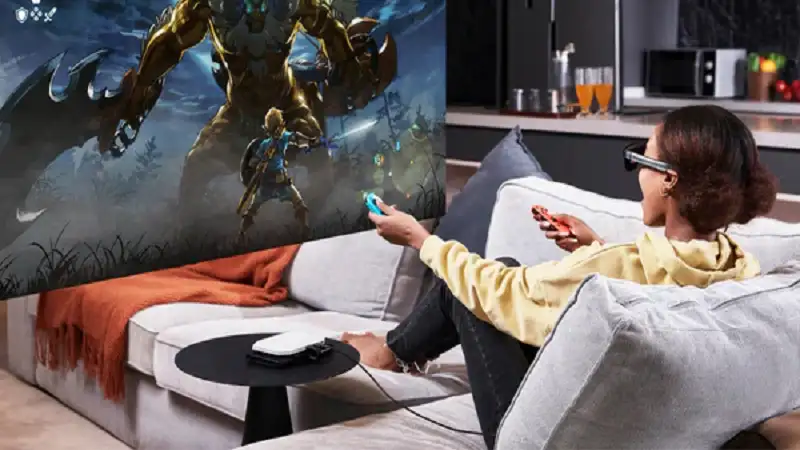
Do you remember the last time you sat in a cramped economy seat? You likely tried to balance a laptop on a wobbly tray table. The angle was wrong, the screen was dim, and privacy was nonexistent. It is exactly this kind of everyday friction that the RayNeo Air 4 Pro AR Glasses are designed to reduce.
We have all been there. Our digital lives have been confined to small, physical rectangles for decades. We hunch over smartphones on the subway, straining our necks. We squint at tablets under the bright sun, fighting glare.
But this era of compromise is ending. A new wave of wearable technology is rewriting the rules of engagement. It promises to liberate us from the tyranny of fixed screens. This is the dawn of a heads-up revolution.
The Era of Constrained Viewing
For years, we accepted the limitations of traditional displays. We traded immersion for portability. If you wanted a big screen, you stayed home. If you traveled, you settled for a phone.
This trade-off created physical discomfort. The phenomenon known as “tech neck” became a common posture complaint. We constantly looked down, disconnecting from our surroundings.
Our privacy also suffered. In coffee shops or airports, our screens were visible to anyone walking by. Sensitive emails or guilty-pleasure movies were never truly private.
Smart Glasses offer a more practical solution to these problems. They do not just shrink a screen; they reinvent where the screen exists. For many people, models like the RayNeo Air 4 Pro AR Glasses make that shift feel real and immediate.
Breaking Free from Physical Screens
Imagine sitting on a park bench. You put on a lightweight pair of glasses. Suddenly, a virtual cinema-sized screen—often described as up to a 201-inch equivalent at a fixed viewing distance— floats in front of you, the kind of experience the RayNeo Air 4 Pro AR Glasses are built to deliver.
You are no longer looking down. You are looking up and out. The content is crisp and vivid, and far harder for the person sitting next to you to see.
Depending on lighting and fit, reflections can still be visible from certain angles—so it’s better to think “more private” rather than “invisible.”
This is the “After” reality. The device does not dictate your posture. You can lie back on a sofa or recline in a plane seat. The screen stays aligned with your line of sight, maintaining a comfortable viewing angle—exactly the kind of comfort-first design the RayNeo Air 4 Pro AR Glasses aim for.
By decoupling the display from a physical device, we gain freedom. We regain our peripheral vision and our comfort.
Understanding the Technology
How is this possible? Modern eyewear uses advanced optics to project images directly into your eyes. It tricks your brain into seeing a massive screen at a consistent virtual distance, which is the core idea behind products like the RayNeo Air 4 Pro AR Glasses.
The technology has matured significantly in 2026. Early models were bulky and low-resolution. Today, we have Micro-OLED panels that deliver high contrast and clarity that can feel “big-screen” for movies and games.
Key specifications to look for include:
- Display Tech: Micro-OLED (often best for high-contrast “private cinema” viewing) or Micro-LED (often used in waveguide-style info displays, with different trade-offs).
- Field of View (FOV): Determines how “big” the screen feels.
- Refresh Rate: 120Hz is a major plus for smooth gaming.
These specs help ensure that Smart Glasses are not just a gimmick. For media, gaming, and light productivity, they can be a credible alternative to a portable monitor—while still not replacing every use case of a dedicated desktop display.
The Visual Revolution with RayNeo Air 4 Pro AR Glasses
Leading this charge is the new contender from CES 2026. The RayNeo Air 4 Pro AR Glasses represent a significant leap forward in visual fidelity.
While competitors focused on AI assistants, this device focused on the display. It targets gamers and movie lovers who refuse to compromise on picture quality.
The RayNeo Air 4 Pro AR Glasses address the biggest complaint of previous generations: washed-out colors. They bring high dynamic range to the face-worn form factor.
Using the device feels like stepping into a private theater. The immersion is instant. It blurs the line between portable and premium.
It’s also worth framing these as display-first wearable glasses: in many setups, they act like a plug-in external screen, rather than a fully standalone computer that maps and anchors 3D objects into your room.
World’s First HDR10 Display
The standout feature here is HDR10 support. RayNeo positions this as the first HDR10 implementation in this class of wearable display glasses, where many products still default to standard dynamic range pipelines.
These AR glasses utilize 0.6-inch Micro-OLED panels. They achieve up to a peak brightness of 1200 nits (claimed peak performance). This means explosions in movies look searingly bright, while space scenes remain pitch black.
Audio That Surrounds You
Visuals are only half the equation. The new hardware also revamped the audio experience.
It features a four-speaker system developed in collaboration with Bang & Olufsen. The sound is directional, meaning it targets your ears while helping reduce noise leakage to neighbors.
This combination of HDR visuals and premium audio makes the unit a comprehensive media powerhouse.
Compatibility and Use Cases
A great display is useless if it does not connect to your gear. The “Before” era required endless dongles. The “After” era prioritizes Plug-and-Play—as long as your device supports USB-C video output (DisplayPort Alt Mode).
For consoles and some older phones/tablets, you may still need an adapter (and sometimes a powered converter), so “dongle-free” depends on what you’re connecting.
These glasses use USB-C DisplayPort Alt Mode. This standard is increasingly common across modern devices.
| Device | Connection Type | Experience |
| iPhone 15/16 | Direct USB-C | Instant mirroring & video apps (requires USB-C video output; iPhone 16e not supported) |
| Steam Deck | Direct USB-C | Up to 120Hz gaming on 201″ screen (where supported by the device/content) |
| MacBook | Direct USB-C | Private second monitor for work (on compatible USB-C models) |
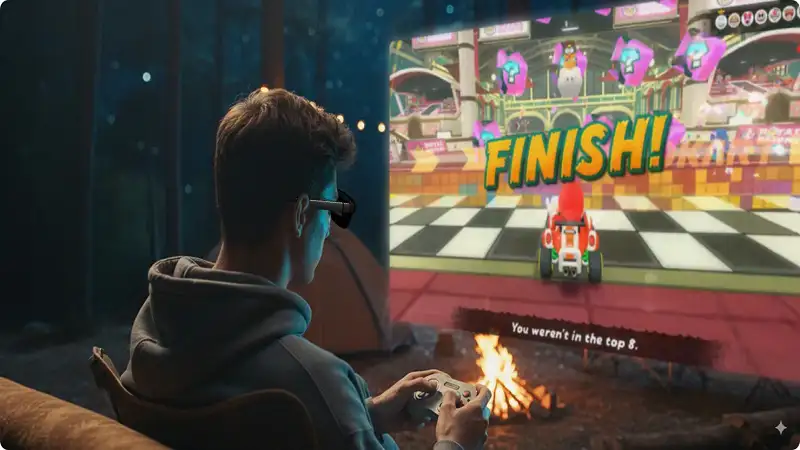
The RayNeo Air 4 Pro AR Glasses excel with handheld consoles. Playing Cyberpunk 2077 on a Steam Deck is transformed.
Instead of a small built-in handheld screen, you play on a virtual cinema screen. The wearable supports up to 120Hz, which can help gameplay feel fluid and responsive when your hardware and game can output it.
Travelers also benefit immensely. The model weighs just 76 grams. It slips into a pocket, often reducing the need for a bulky tablet for movies and casual work.
Because this category typically relies on a connected device for power and video, it shines most as an external display—not as a standalone computer.
A New Standard for Immersion
The shift to Smart Glasses is about quality of life. It is about reclaiming your personal space in a crowded world.
This technology proves that we don’t need to wait for the distant future. The hardware is ready now for high-quality, plug-in “private screen” experiences.
With the Air 4 Pro, you get more privacy without isolation. You get a massive scale without the massive footprint.
Many first-time users find that after a few sessions with a high-fidelity wearable display, going back to a small phone screen can feel surprisingly restrictive. The “After” lifestyle is simply superior.
Is It Time to Switch?
We are at a tipping point. Wearable displays have graduated from prototypes to polished consumer products.
Much of the friction is gone. The visual fidelity can rival the monitor sitting on your desk for movies, gaming, and light productivity—while color-critical, ultra-high-resolution workflows still favor dedicated monitors.
At an MSRP of $299, and an early-bird price of $249 for the first 30 days, the barrier to entry is lower than most people expect.
If you are tired of hunching over small screens, the solution is clear. It is time to look up. It is time to embrace the view.